
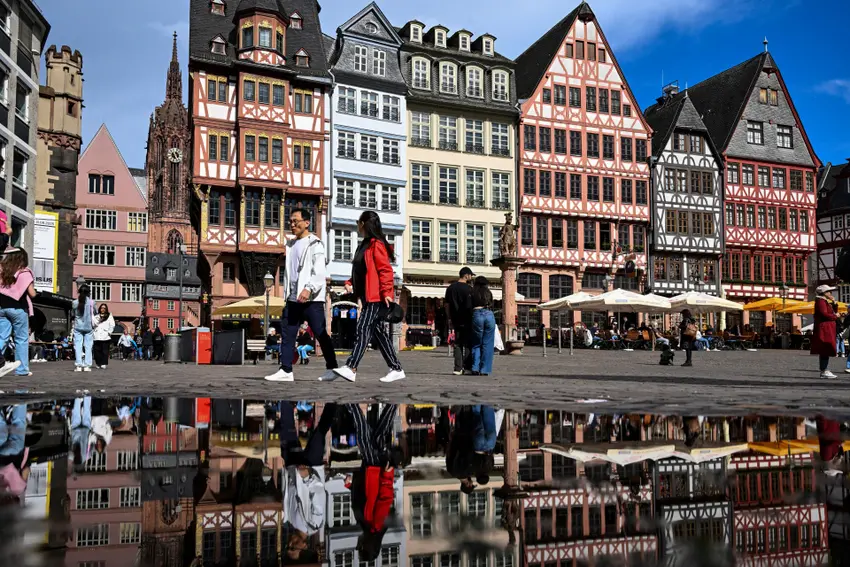
Last week a coffee shop in Munich defended members of its staff for not speaking “perfect German” in a post on social media that immediately got a lot of attention.
The post seemed to be written in response to German customers who had reacted (presumably quite negatively) to the fact that someone working in Munich might not speak the language well.
It elicited a debate on the topic on social media, as well as a strong reaction from our readers – many of whom have had their own experiences learning German and facing language-related challenges in the workplace or while living in Germany.
So we asked readers to share their experiences of learning German and using it in their day to day lives.
How much is enough?
More than a third of the readers who responded to our survey said that they did believe a high level of German (such as B2 or above) was necessary to live in Germany.
Another quarter said that basic German is enough, while just over a fifth said it's only really necessary if you live in Germany longer-term.
The smallest group of respondents (about 13 percent) said they don’t think you need German language skills at all to live in the country.
How much German your own life requires depends on factors including; your job, where exactly you live and how much you aim to actively integrate with your surrounding community.
"In smaller cities you do have to speak German to get by but in big cities like Munich or Berlin English is enough," wrote one respondent.
Many readers echoed this sentiment. Adrian, an Australian who lives in Berlin, said that it's "easy to survive without German" but added, "I feel bad making people switch to English for me and feel I won't be able to truly connect with others unless I learn German."
Another respondent said that learning the language "definitely helps", but added that "for many professionals it’s not essential."
On the other hand, Herminia Mante, who comes from Mexico and lives in Dortmund, says, "You absolutely need to be fluent if you want to have a decent job.
"I'm always puzzled how reluctant highly educated Germans are to speak English although they are completely fluent," she said.
READ ALSO: The best websites to find English-speaking jobs in Germany
The struggle is real
Asked about the challenges she faces with the language, Herminia noted that language study "takes way too much time if you have a full-time job."
She added that being a second-language speaker here can be more tedious than in other places: "There is a tendency of Germans to correct every little mistake. I can't figure out if they mean well, or maybe they are just patronising... Either way, this would never happen in the United States where most people don't care about accents and the like."
Trevor Rasmussen, from the US and living in Saarbrucken, also spoke of challenges speaking to native Germans: "I’m regularly discouraged. Hearing is hard sometimes as it takes a lot of energy to concentrate on what is being said."
Hard as it may be, Trevor suggests that the times when he shows "real mastery" in the language can be attributed to years of hard-fought conversation, not just academic classes.
"Be ok with showing your weakness in language to others. In the end, the interactions with others is where true learning comes, if you are brave enough," Trevor adds.
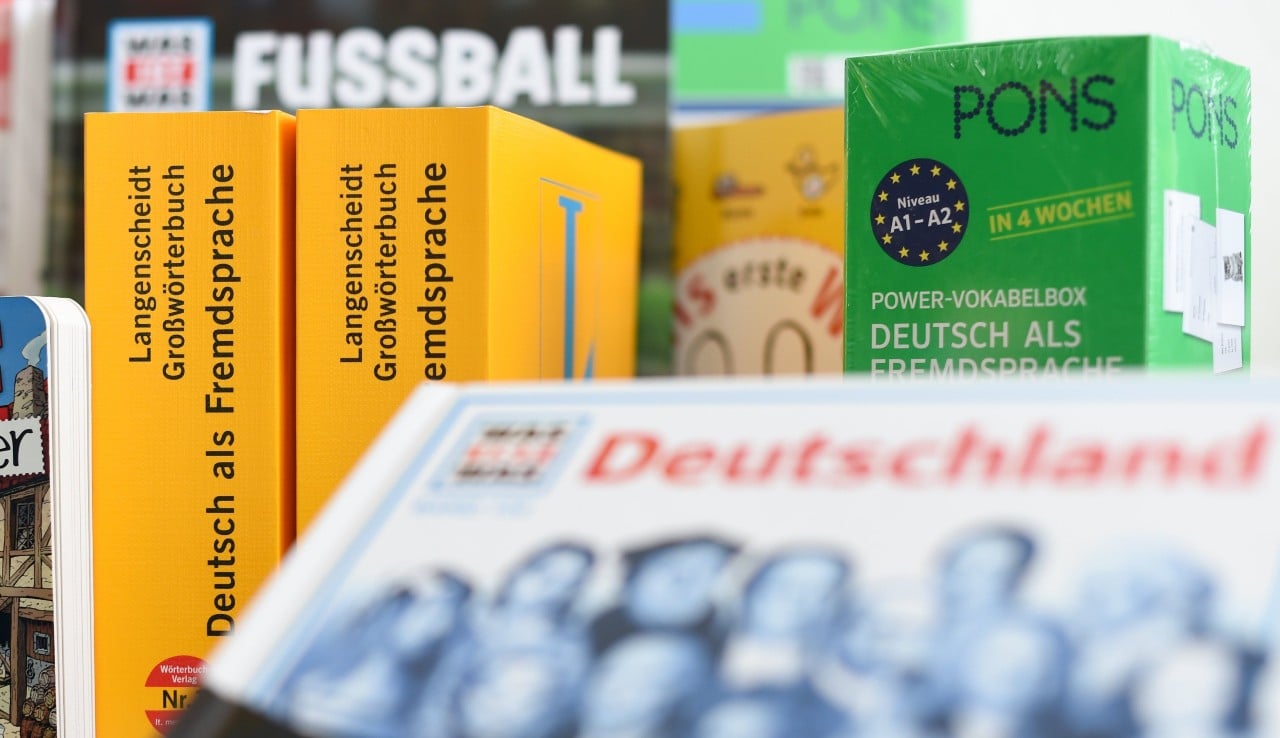
A large number of respondents highlighted the fact that German is not an easy language to learn.
"Why say something in five words when you could take 20?" writes one respondent, adding, "for an older person like me, I've forgotten the beginning of the sentence by the time I hear the verb at the end!"
Complicated grammar is among the more common complaints, along with long-words, pronunciation and difficulty listening. But for many readers the act of learning itself can be the greatest challenge.
"After flunking every German class I have taken and three times the Goethe B1 speaking and writing test, you bet I'm discouraged," said Anitra Kitts, an American living in Munich.
READ ALSO: The seven stages of learning German every foreigner goes through
And while plenty of foreigners in Germany are content to aim for a strong command of the basics, the learning process doesn't necessarily get easier from there.
"There's too much emphasis on getting grammar correct," complains Simon, in Darmstadt. He notes that for most of his 26 years in Germany he got by well with A2 to B1 level skills, but that staying at this level ultimately "limited [his] opportunities for friendships and integration..."
"Making more effort to improve earlier would have been better," Simon advises.
For others, it can feel like even more advanced skills are not quite good enough.
"Society in large expects you to know [German] from the get go, and gives no leeway when you can't speak it in a work context," says Skully, who lives in Hamburg. "I feel some colleagues were a tad narrow-minded and not in touch with the reality that German is not the lingua franca for many around the world."
Overall, most respondents agree that making some effort to learn and speak German is important and improves one’s life in Germany. But just about all respondents also noted that their own German was a work in progress – and that it might always be.
“Always working to improve my German,” writes one American living in Bavaria.
Germans speaking English
Being an English speaker in Germany can be both a blessing and a curse. The blessing is that many Germans can speak English pretty well, and the curse is that many Germans can speak English pretty well.
"People hear my American accent and switch to English," says Christa W. in Heidelberg, summing up the age old frustration of many English speakers who are actively trying to improve their German.
In Germany's larger and more international cities, and especially in Berlin, even finding a chance to practice German can be difficult.
“If you live in certain parts of Germany, like Berlin, almost everyone speaks English to you anyway, even if you try to speak German,” writes Christopher Gordon Wilson, from New Orleans, who lived in Berlin for seven and a half years.
Tony, who also lives in Berlin, points out that this effectively prevents easy practice and then puts unprepared learners in the hot seat when the stakes are high: "Many service workers are also not native German speakers...This means you often don't get the chance to practice in 'easy' settings, and are forced into German in more complicated situations like at a government office or doctors surgery."
LISTED: The best free websites and apps for German language learners
Thank you to all our readers who took the time to share their experiences and comments in our survey! Do you have something to add? Feel free to comment about your own German learning experience below.
Comments